
Synthetic woven mesh for filtration, by application
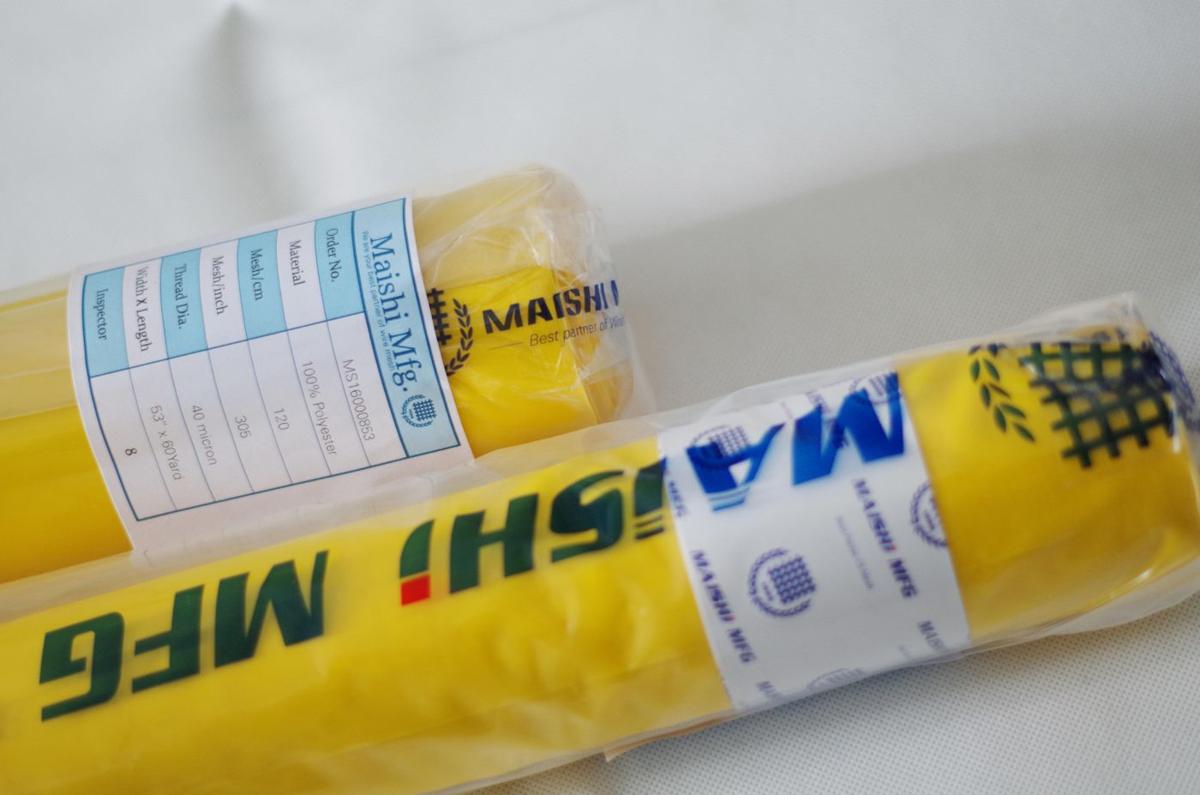
MAISHI manufactures nylon, polyester and polypropylene monofilament mesh with apertures from 5 µm to 1900 µm, supplied in rolls, slit strips and cut pieces.
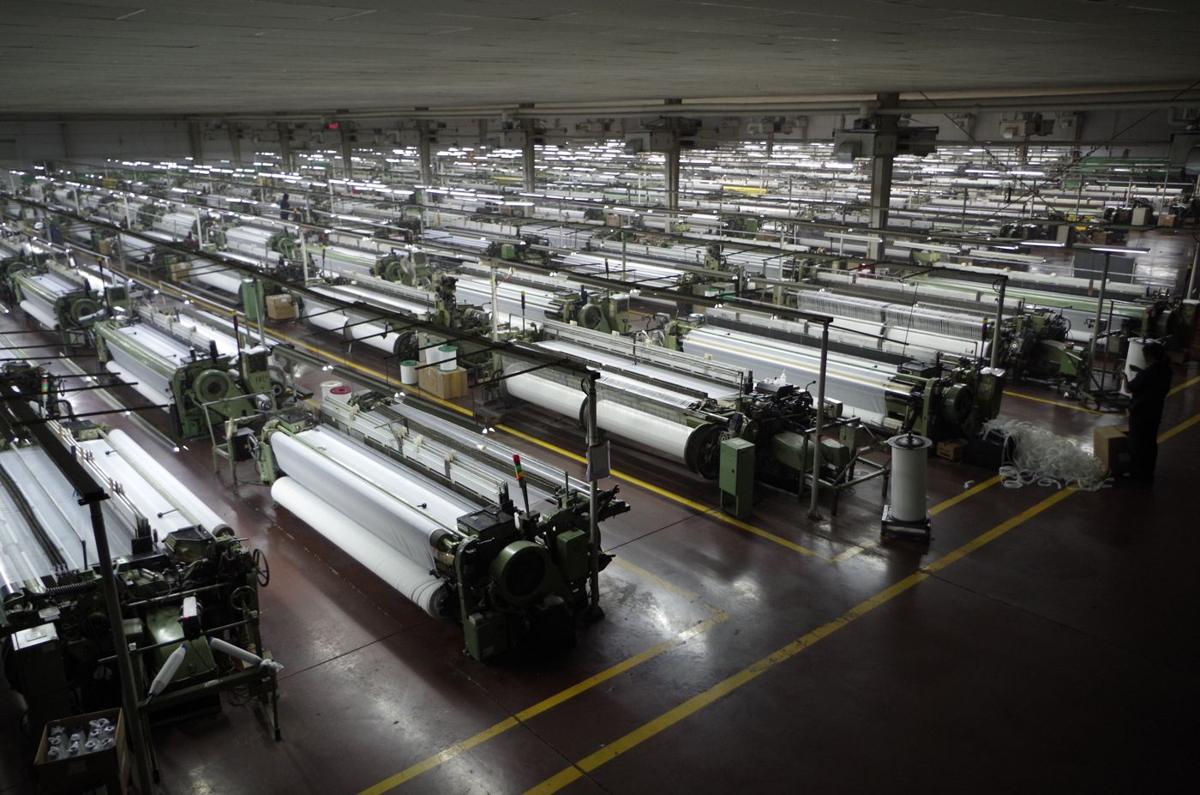
Filtration mesh: choose your application
Paint, ink, chemical and process liquids. 25 – 400 µm most common.
View constructionsPA6 · PA66Food FiltrationTea bag mesh and milk filter bags. Nylon meets FDA 21 CFR 177.1500.
View constructionsPA6 · PETWater & Oil FiltrationWater treatment screens, oil filter strips and lubricant filtration.
View constructionsPA6 · PETEquipment & Filter ElementsMesh for automotive filters and appliance filter parts, cut to size.
View constructionsPA6 · PETPowder SievingChemical, food and coating powders. Antistatic treatment available.
View constructionsPPAir Filter Support MeshPolypropylene mesh with good acid and alkali resistance.
View constructionsPapermaking: polyester fabrics and stainless wire cloth
Forming fabrics and woven or spiral dryer fabrics, made to your machine's dimensions.
View fabric types 304 · 316 · 316LStainless Steel Paper Mill Wire ClothCylinder mould covers, pulp washer and filter drum cloth, wrapped edges, welded joints.
View specificationsWhy buyers choose MAISHI
Uniform apertures
Monofilament mesh woven on Sulzer looms. Each thread is a single smooth filament, so openings stay consistent and the mesh does not shed fibres.
Full range
Nylon plain weave from 10 to 356 mesh/inch and twill weave down to 5 µm. Polyester in more than 100 constructions.
Converted to your size
Slit strips, cut pieces and custom widths, with flexible roll lengths for trial orders. Every order is fully inspected before shipment.
Experienced exporter
More than 30 years in wire mesh, with products exported to over 95 countries.
From warp to packed roll
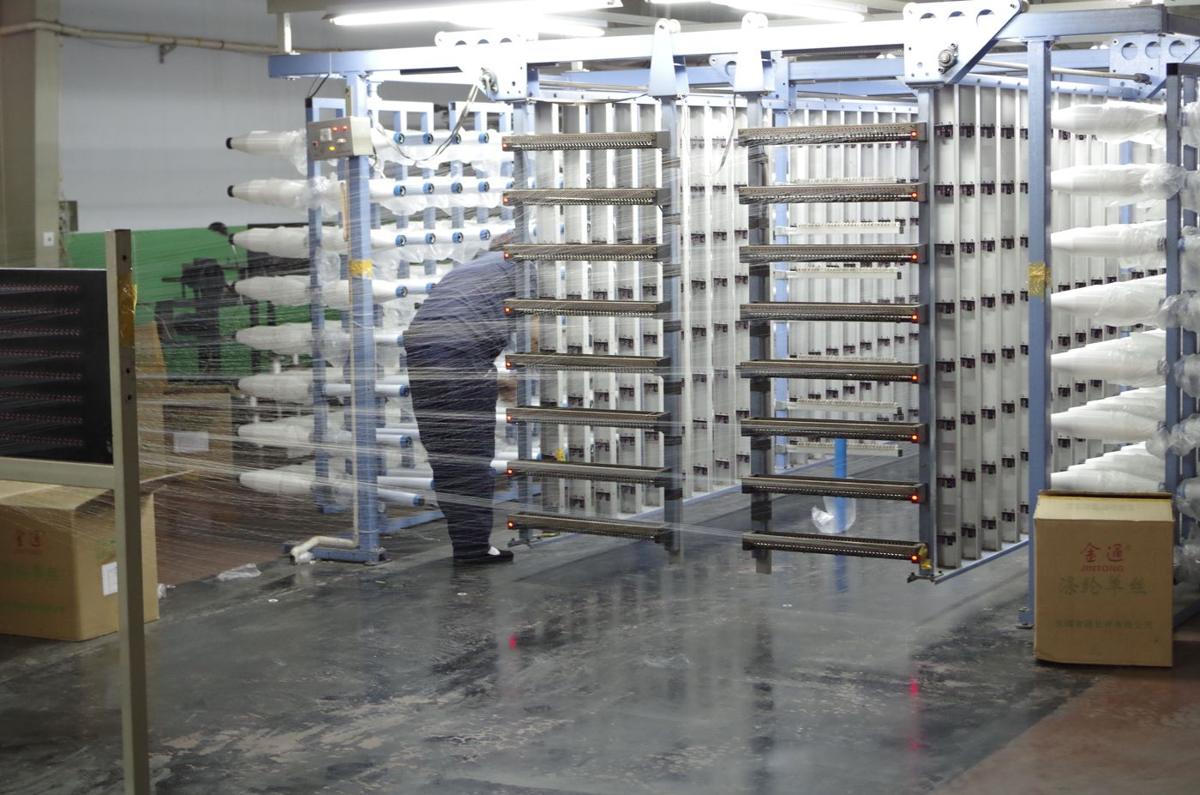
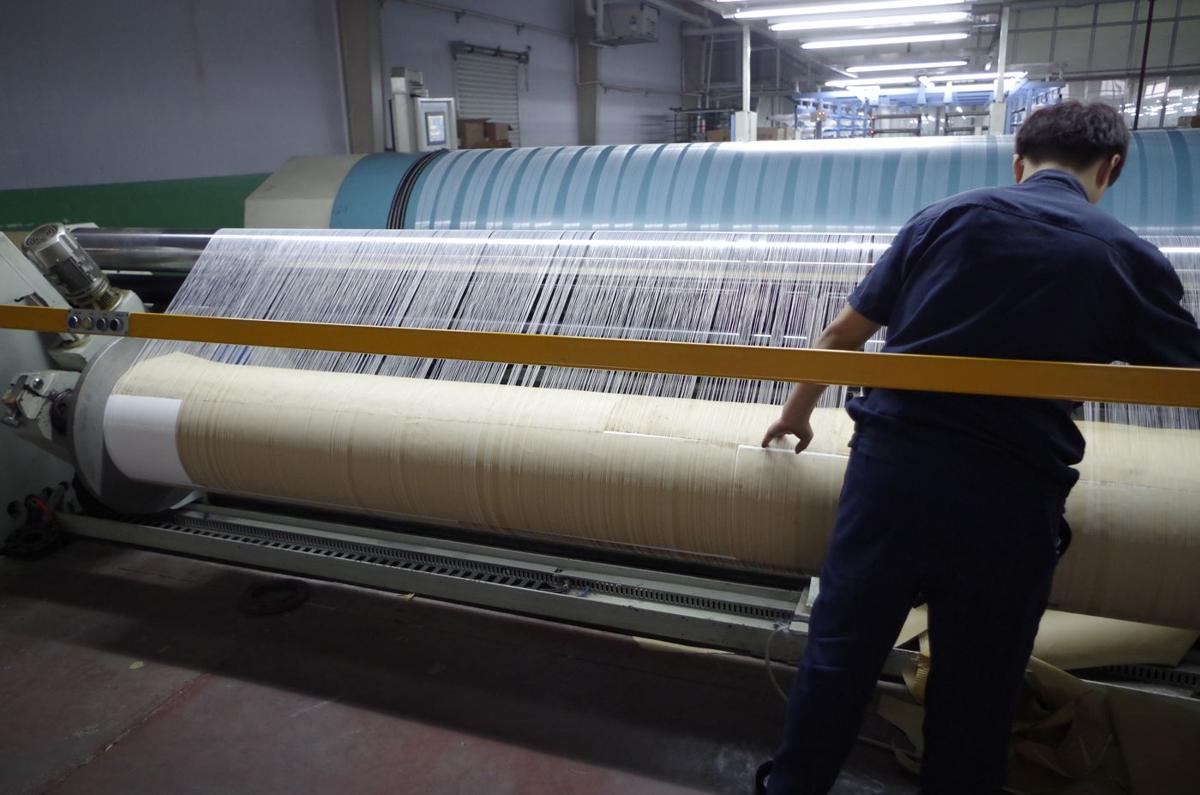
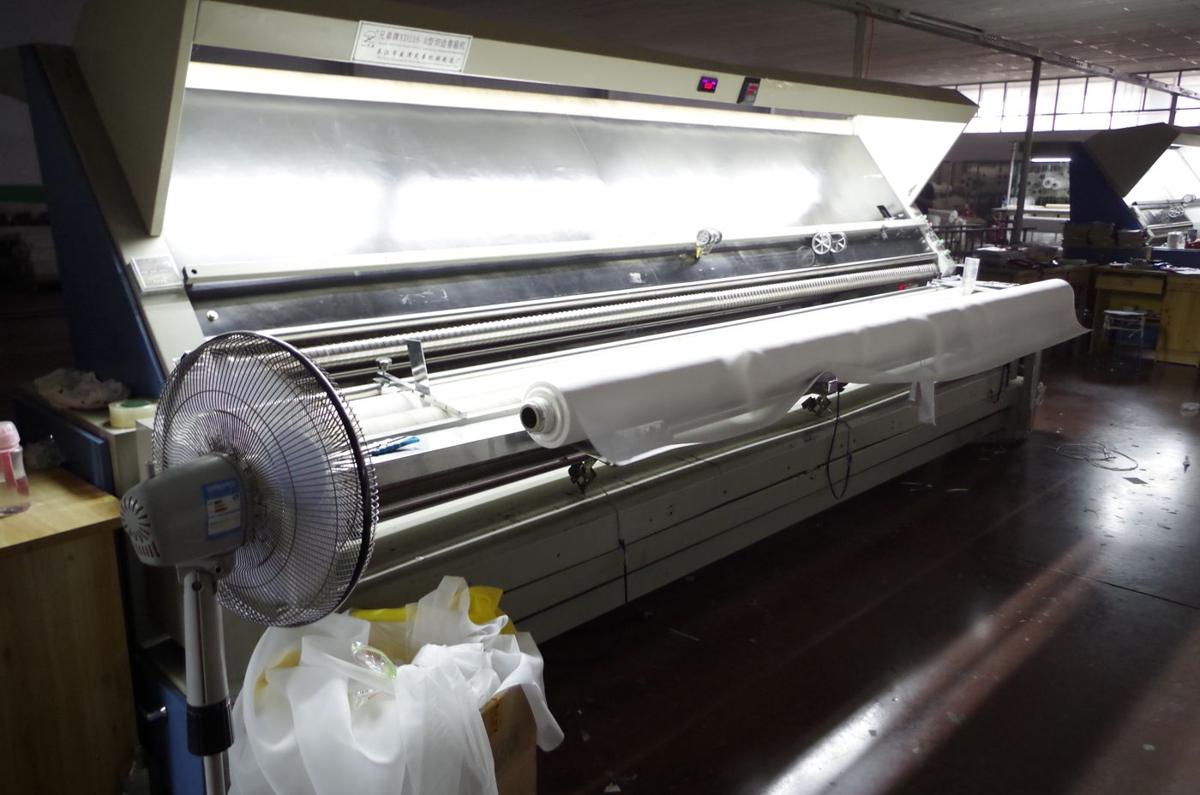
Nylon or polyester?
| Condition | Choose polyester (PET) | Choose nylon (PA) |
|---|---|---|
| Medium | Acids, oxidisers | Alkalis, oils, fuels, solvents |
| Moisture | Wet or humid use; absorbs 0.4 % moisture, stays dimensionally stable | Absorbs 3.5 – 4 % moisture; best where tension loss is not critical |
| Mechanical | High tension, low elongation | Abrasion, repeated flexing, elastic recovery |
| Cost | Lower | Higher |
Typical polymer property values. Final selection depends on temperature, concentration and contact time. Send us your process conditions for a recommendation.
How to read our specifications
- Mesh count: threads per inch (mesh) or per cm (T). 77T = 196 mesh.
- Opening (aperture): clear distance between adjacent threads, in µm. Nominal opening = 10000 ÷ T − thread diameter.
- Open area: share of the surface that is open. Open area = (w ÷ (w + d))² × 100 %.
- Thread diameter: nominal value before weaving. Woven threads flatten slightly, so measured openings are usually a few percent smaller than nominal.
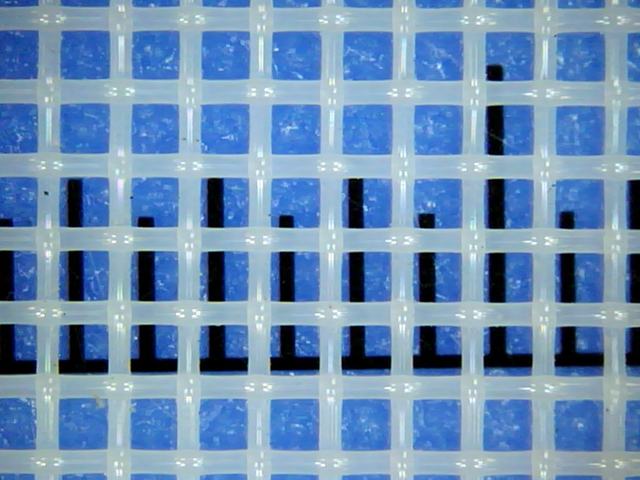
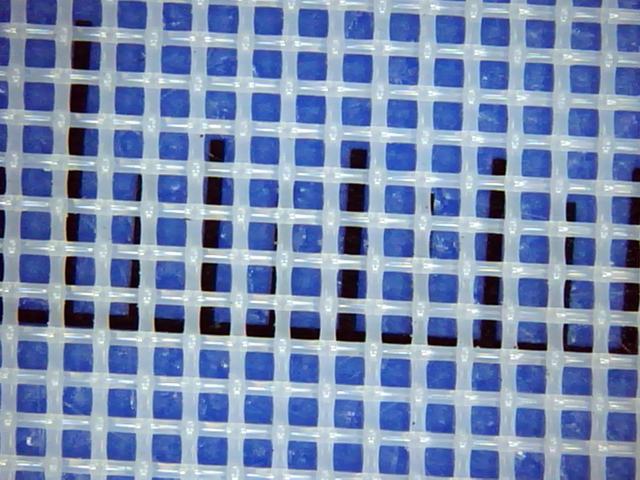
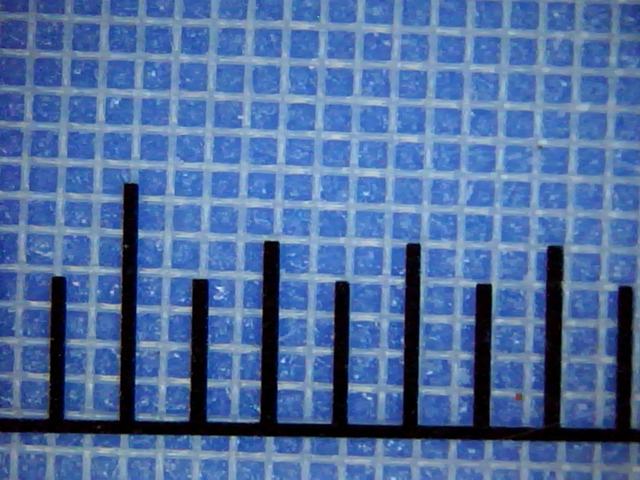
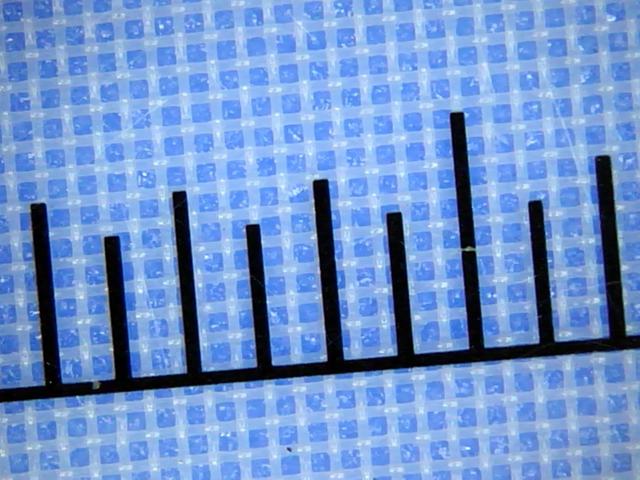
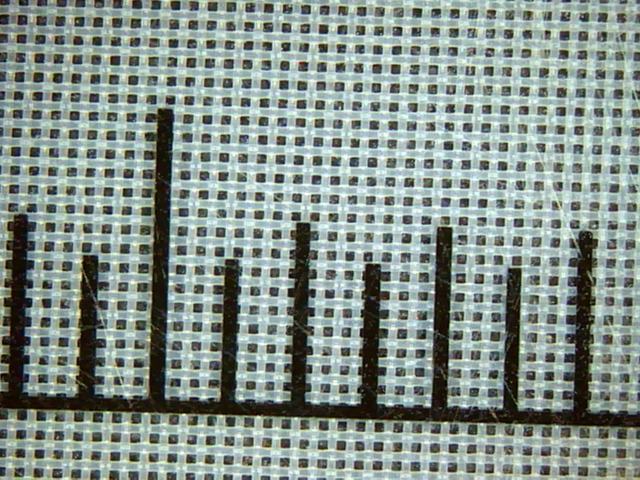
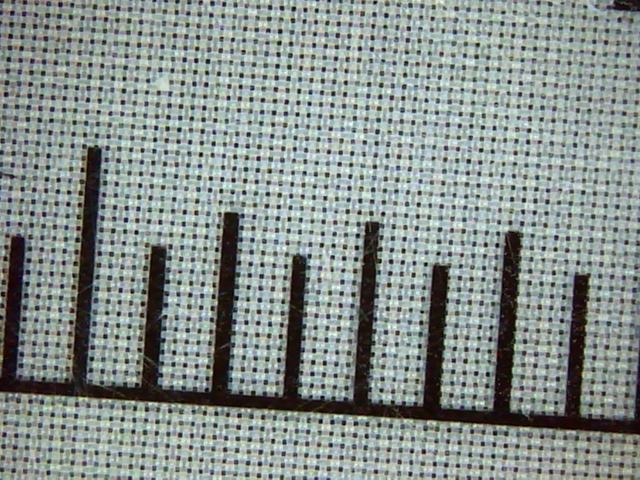
Polyester mesh under the microscope
Real photographs of production samples against a measuring scale.
Need a construction we have not listed?
Send the aperture, material and width. We reply with a recommendation, price and lead time.